Exploring the History of Bibury, a Classic Cotswold Village
Bibury is often described as one of the most beautiful villages in England, and its history stretches back more than a thousand years.
The village is mentioned in the Domesday Book of 1086, recorded as a small but valuable settlement centred around agriculture and sheep farming, which later became a cornerstone of the local economy.
During the Middle Ages, Bibury prospered through the wool trade, with the clear waters of the River Coln playing a vital role in washing and processing fleeces.
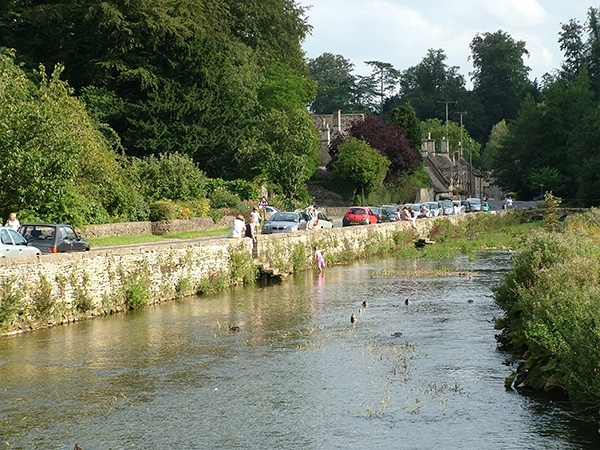 The River Coln runs through the village of Bibury
This legacy is most famously reflected in Arlington Row, a picturesque line of weavers’ cottages built in the late 14th century to house skilled workers employed in the wool industry. Today, Arlington Row is one of the most photographed scenes in the Cotswolds and remains a powerful symbol of the village’s working past.
Just across the River Coln stands Arlington Mill, an important part of Bibury’s industrial heritage. Historically used as a fulling and wool mill, it played a practical role in processing cloth produced by local weavers. Powered by the river’s steady flow, the mill highlights how Bibury functioned as a working village, supporting the wool trade that underpinned its medieval prosperity.
Bibury’s historic church, St Mary’s, dates back to Saxon times and reflects centuries of architectural development, mirroring the village’s gradual evolution. In the 19th century, Bibury gained national attention when designer and social reformer William Morris described it as “the most beautiful village in England”, a quote that helped cement its enduring reputation.
Despite its fame, Bibury has retained much of its traditional character, with honey-coloured stone buildings, water meadows, and a strong connection to its rural heritage continuing to define the village today.